
Ever since high school, I felt called to ministry, although I didn’t fully understand what that meant. It’s the kind of moment many churchgoers have had, or heard about, at least once. I was at a church conference, and the preacher—the kind who could make a room laugh, then cry, then laugh again—ended his sermon with an altar call for anyone who felt God pulling them toward ministry. While the worship team sang “Take the coal, cleanse my lips, here I aaammmm,” I walked up to the stage along with several hundred other teens, weeping and praying. The preacher kept calling more of us forward. “If the Holy Spirit is stirring in your heart to not just give your life to Jesus but to dedicate your life to serve the church, to go out into the mission field proclaiming his name, come up! Come up!” My face was warm, my heart was fluttering, and I was convinced God was telling me I was made for ministry. I was here to serve his people. What did that mean? I had no idea. I assumed I would know it when I saw it. I also expected to excel at it naturally because that’s how God had already prepared a way for me, right?
For a long time, I moved toward opportunities that felt aligned with who I thought I was meant to be. Sometimes I chased them, sometimes they found me. Some seasons opened beautifully while others collapsed almost immediately, and still others closed too slowly.
There’s a particular kind of heartbreak that comes from believing you finally found the thing you were made for, only for things to crumble. For years, I believed calling deserved everything—my time, energy, resources, all of it. I kept going further than I should have, burning out in the name of Jesus. It felt noble to give until there was nothing left; the more depleted I became, the more devoted I seemed. So I’d rest just long enough to get back up and go again. Except each cycle got shorter, until there wasn’t much left—just me, burnt to a crisp. When I would tell a leader how much I was attempting to carry, they would ask, “Do you feel called to this or not?” So I worked harder.
Turns out white-knuckling through isn’t the same as being faithful. I thought each season would make me stronger, more certain. Instead, I became someone who asks more questions.
Over time, I’ve started to see calling as responding to what’s in front of me. Cole Arthur Riley writes, “Dignity rests on our capacity to be alive to ourselves and others.”
As a spiritual director, I sit with people as they lay their masks down. As a managing editor, I tend language until it says what the author means. As an artist, I make something where nothing existed before.
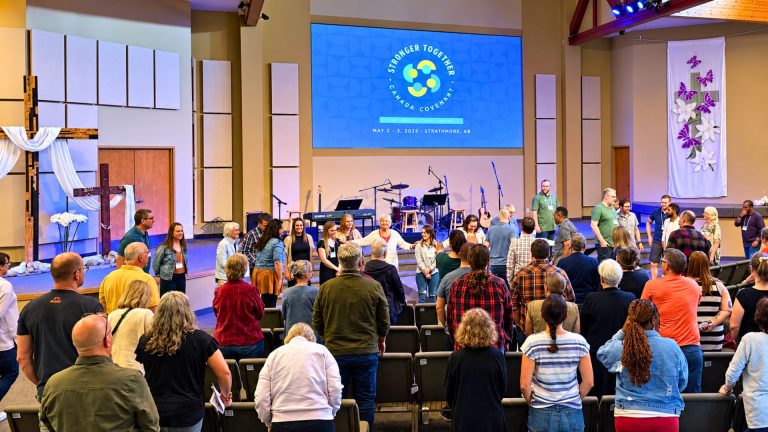
This year marks fifty years since the Covenant affirmed women’s ordination. The language—”called and gifted”—holds the weight of women who had to insist that what they knew in their bones was real, even when institutions denied them. It holds the legacy of hard conversations and deeper work. What those women understood was that calling is collective work—it’s about what we do when we are together.
With my role, I get to imagine what stories will emerge, what the latest issue of the Covenant Companion will become. But the actual work happens in the gap between intention and reality, where writers show up with their own voices and their own truths, where designers create artwork that holds the stories, where each person brings what only they can bring.
Who are we becoming in this work? Who are we refusing to see? What are we making room for? Where are we withholding tenderness? The answers emerge as we lean into what is in front of us rather than chasing the dream in our head. Which is better, because it’s real.
This article was first published in the Covenant Companion Summer 2026 issue, the official magazine of the Evangelical Covenant Church.