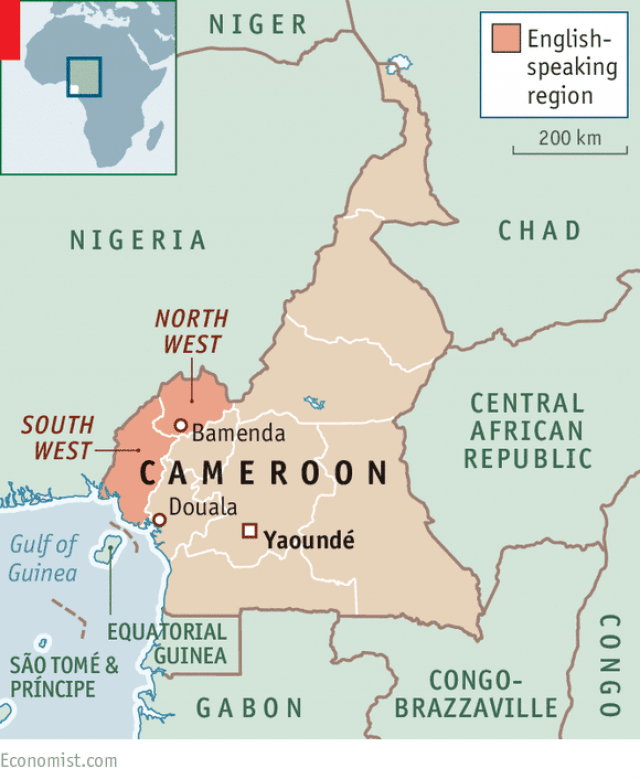
CAMEROON (August 14, 2018) – Due to the spread of horrific violence and the near outbreak of civil war here, Covenant missionaries who were working in the northwest section of the country have moved in recent months to a safer location in another region.
The violence has driven as many as 50,000 people from their homes.
 Three couples remain in Cameroon and another has applied to serve there. One missionary couple is on home assignment and uncertain whether they will return. We are not identifying missionaries by name due to safety concerns.
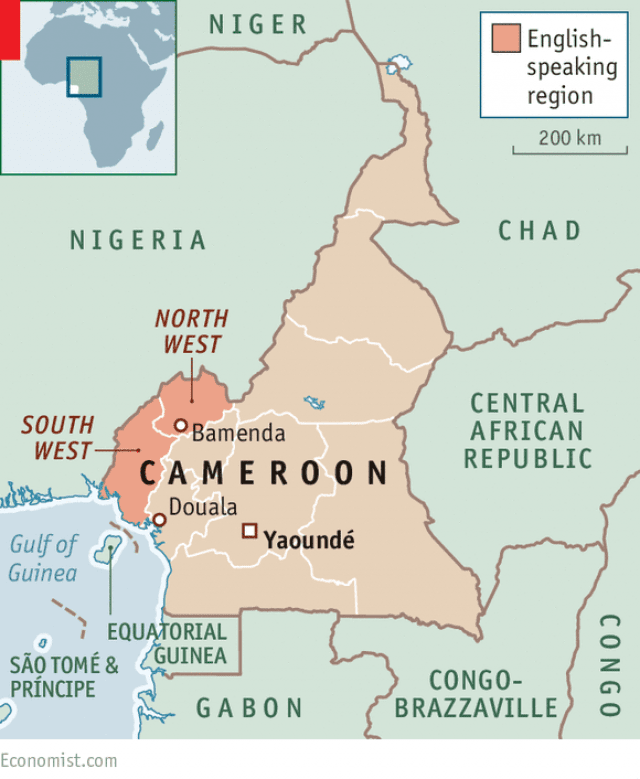
The country is divided into two major sections—Francophone and Anglophone (French- and English-speaking, respectively). The Anglophones are primarily located in a small northwest section of the country. English-speaking separatists hope to form a new country called Ambazonia.
The language differences date back to the period after World War I, when France and England held territory taken from Germany. The different regions were federated into a single bilingual nation in 1961. English speakers are outnumbered five to one and have long felt discriminated against.
An official with a Bible translation group recently told an interviewer that 400 translators in the area of conflict had been displaced and several were killed. The United Nations Office for the Coordination of Humanitarian Affairs estimates that more than 15,000 people have been displaced in the country since December last year. An additional 20,000 to 50,000 have sought refuge in neighboring Nigeria.
Paul Biya, who has been in power since 1982, is sub-Saharan Africa’s longest-ruling president. Elections are scheduled for October. Whether Covenant missionaries remain in the country could depend on the reaction to election results, said Deb Masten, ECC director of missionary personnel.
Longstanding tensions between the groups erupted into worsening violence after October 2016, when English-speaking judges, teachers, and others went on strike to protest systemic discrimination. The government responded with a violent crackdown. In response, English speakers formed separatist militia groups.
Since then government and separatist forces have engaged in atrocities that have included the burning of villages, as well as torture and killing of civilians.