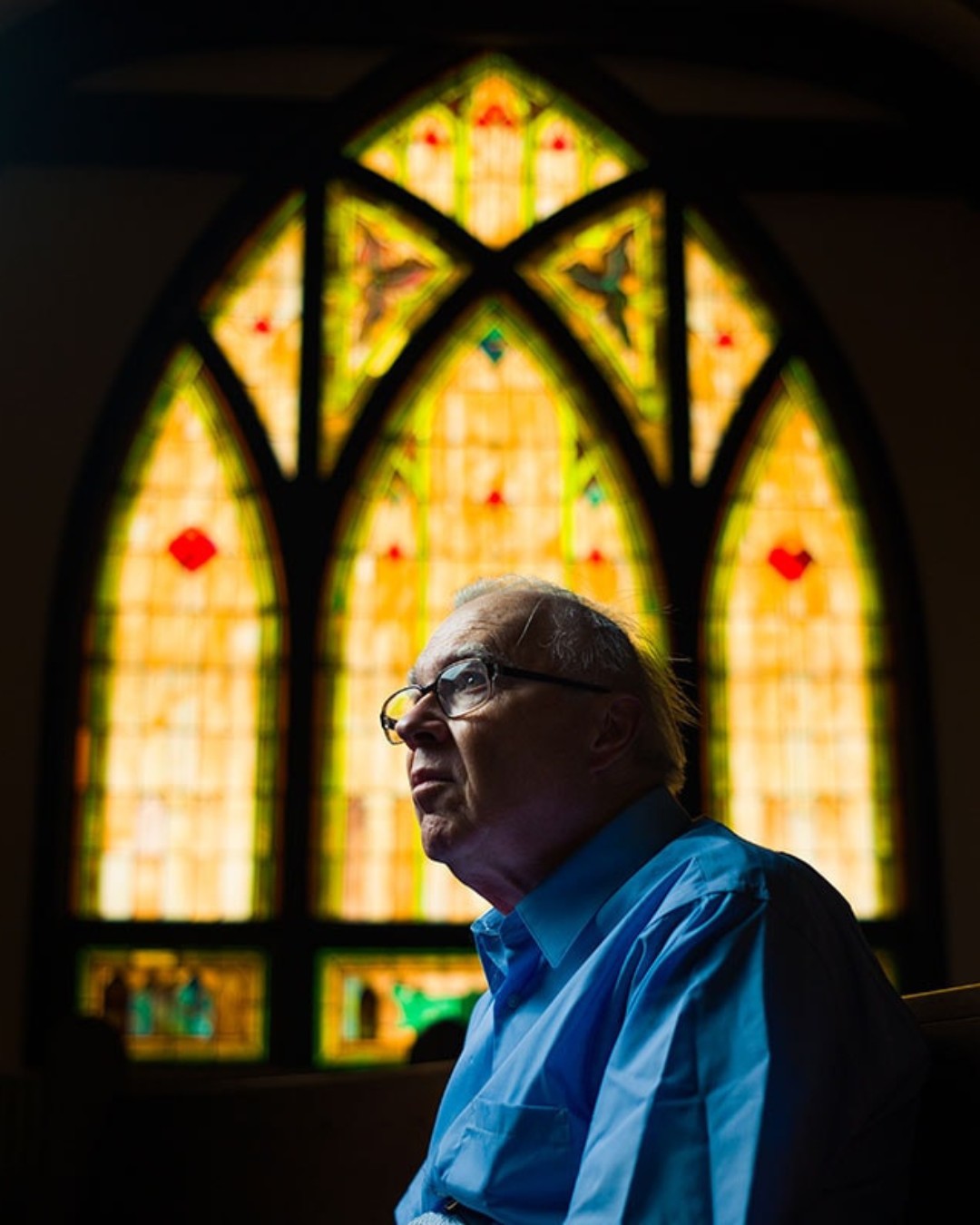
CHICAGO (May 18, 2011)—The first time C. John Weborg entered the chapel at North Park Theological Seminary was nearly sixty years ago. It was 1954, and he was a junior college student.
On May 9, the school’s professor emeritus of theology preached his last sermon in Isaacson Chapel. It was his last pastoral act before officially retiring—again.
Weborg, who is 74 years old and considered one of the denomination’s most influential theologians, retired from full-time teaching in 2003. However, he continued to teach part-time in the Center for Spiritual Direction. He will relinquish those duties this summer, and the center will formally be renamed the C. John Weborg Center for Spiritual Direction in July.
In his introductory comments, Weborg thanked the seminary community for the privilege of more than thirty years of teaching. In his inimitable fashion, he chose his words carefully and exegeted them for his audience.
Explaining that he prefers the word “relinquish” to “leaving,” he said, “One thing I’m thankful for is that I don’t finish, and neither will you. And so we don’t get paranoid in the ministry, somebody else will perfect our work, for which we give thanks.”
The text of his sermon was 1 Peter 1:17-23. “In this text, Peter says that because God raised Jesus from the dead, we trust in God.”
Quoting theologian N. T. Wright, Weborg went on to say, “None of the Gospels say Jesus was raised and therefore we shall go to heaven when we die.” In fact, none of the Gospel narratives mentions the afterlife, the promise of eternal life, or “pie in the sky ideals.” Rather, they say simply, Jesus is raised. Therefore, he is the Messiah. And now his followers have work to do.
“Why did Jesus spend 40 days moving in and out among this disparate group of disciples—this scattered bunch, who were scared to death?” Weborg asked. “Why did he spend 40 days collecting them, meeting with them, vanishing, reappearing, celebrating the Eucharist, speaking with them—why if it wasn’t to justify them? He was to justify them, not by dying but by walking among them.”
When Jesus was convinced the disciples knew he trusted them to finish the good work he had begun in them, he knew he could leave.
A stanza from 17th-century German hymnwriter Paul Gerhardt helped illuminate Weborg’s point: “Before I was even born, then you were born for me and made me your very own, before I knew you, chosen.”
“How’s that for Gospel?” Weborg asked. “I could name every one of you chosen. In not many days, some of you will graduate. You’re in the call process. ‘Before you were even born, then you were born for me and made me your very own, before I knew you, chosen.’ ”
At the conclusion of the service, Weborg blessed the congregation and invited them forward to receive communion.